Psychological Safety
"Google's own research proved it. Leadership is not over-rated. Psychological Safety is the force multiplier your organisation cannot afford to ignore."
"The single most important factor in team performance is not intelligence. It is not experience. It is not technical skill. It is whether the people in that team feel safe enough to say what they actually think. Google spent millions of dollars studying 180 teams to reach that conclusion. The research is unambiguous. And most organisations are still ignoring it."
In 2012 Google launched one of the most ambitious workplace research projects in corporate history. Project Aristotle studied 180 teams across the organisation with a single objective — to identify what made some teams significantly more effective than others.
They looked at everything. Individual IQ. Educational background. Personality types. Management styles. Co-location versus remote working. Years of experience. Friendship networks. They had access to more data about their own workforce than almost any organisation in history.
And after years of analysis, the answer was not what anyone expected.
The single most important factor in team effectiveness was not who was on the team. It was how the team felt about being on the team. Specifically — whether team members felt safe to take interpersonal risks. To speak up. To ask questions. To admit mistakes. To challenge ideas. To bring their whole thinking — not just the parts they were confident would be well received.
Amy Edmondson of Harvard Business School had been studying this phenomenon since 1999. She called it Psychological Safety — a shared belief held by members of a team that the team is safe for interpersonal risk taking. Her research in hospital settings had already shown something counterintuitive — teams with higher psychological safety did not make fewer mistakes. They reported more mistakes. Because they felt safe enough to acknowledge them. And that transparency made them dramatically safer over time.
Project Aristotle confirmed what Edmondson had been demonstrating for over a decade. Psychological safety is not a nice-to-have. It is the foundation upon which every other team capability is built.
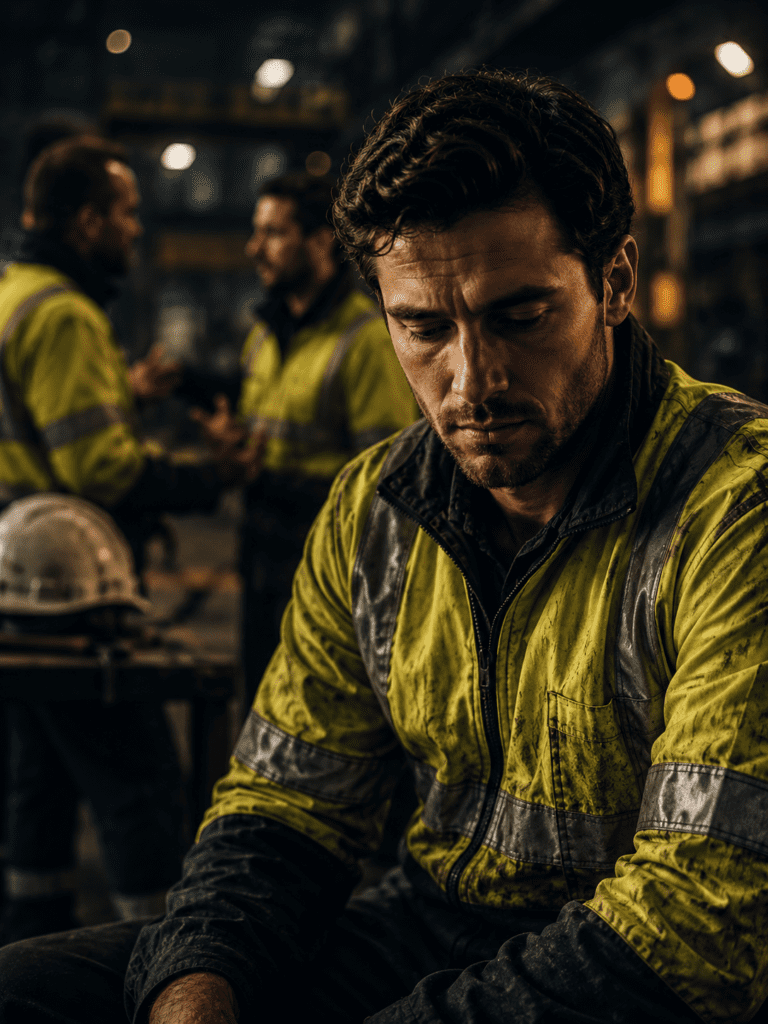
In safety-critical industries the implications are profound. Every near miss that goes unreported. Every concern that is raised and dismissed. Every worker who notices something wrong and says nothing because the last person who spoke up was made to feel foolish. Every one of those silences is a failure of psychological safety. And every one of them is a step closer to the incident that eventually cannot be ignored.
Transformational Safety® has been integrating psychological safety into its leadership and culture work for over two decades — long before it became a management buzzword. The Transformational Safety® Leadership framework identifies psychological safety as the force multiplier for every other safety initiative — the condition that makes all other interventions more effective, and whose absence makes them less effective regardless of their technical quality.
Building psychological safety is not about being nice. It is not about avoiding difficult conversations. It is about creating the conditions where difficult conversations can actually happen — honestly, safely, and productively. That is what the Transformational Safety® Psychological Safety program develops. And that is what keeps people safe.
"Every near miss that goes unreported. Every concern raised and dismissed. Every worker who notices something wrong and says nothing. Every one of those silences is a failure of psychological safety. And every one of them is a step closer to the incident that eventually cannot be ignored."