Trauma Recovery
"Workplace trauma does not just hurt people. Left unmanaged it becomes a long term infection that permanently damages your safety culture, destroys trust in leadership, and negatively impacts your organisation for years to come. Most organisations have no plan for what happens next."
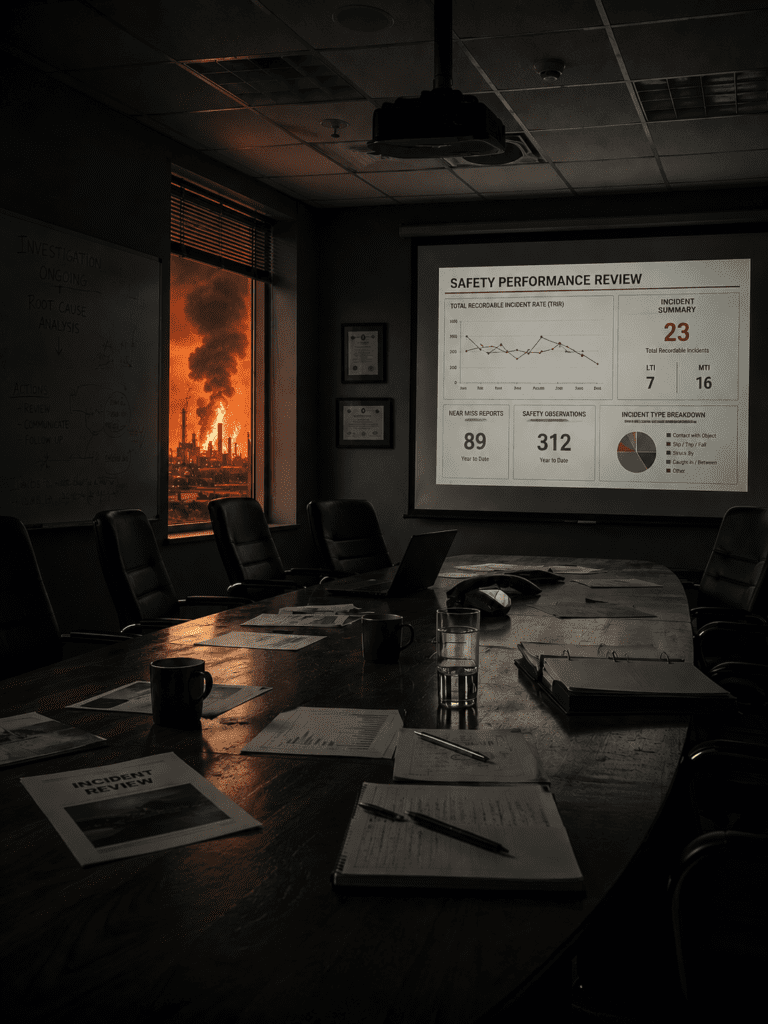
"Most organisations manage the mechanics of a workplace trauma reasonably well. They call the ambulances. They secure the scene. They notify the regulator. What they almost never do is manage what happens to the culture in the weeks and months that follow. That is where the real damage occurs. And that is where Transformational Safety® intervenes."
When a serious incident occurs in a workplace, the immediate response is usually competent. Emergency services are called. The scene is secured. Regulators are notified. Investigations are launched. Counselling referrals are made available.
And then, about six weeks later, something begins to happen that nobody planned for.
Productivity drops. Absenteeism rises. Workers who were not directly involved in the incident start behaving differently — more cautiously, more anxiously, or with a kind of flat disengagement that is hard to name but impossible to ignore. Trust in leadership erodes. The informal conversations that sustain a healthy safety culture go quiet. People stop reporting near misses. They stop raising concerns. They put their heads down and do their jobs — and nothing more.
This is organisational trauma. And it is one of the most underestimated threats to workplace safety culture in existence.
The psychological research on this is unambiguous. Traumatic events do not just affect the people who were directly exposed to them. They ripple through the entire organisational system — through teams, through departments, through leadership structures — in ways that are predictable, measurable, and if left unmanaged, permanent.
Bessel van der Kolk, one of the world's foremost authorities on trauma, demonstrated in his landmark work that the body — and by extension, the organisation — keeps the score. The experience of trauma is stored not just in memory but in behaviour, in culture, in the way people relate to each other and to the systems around them. Recovery does not happen by itself. It requires deliberate, skilled, evidence-based intervention.
Transformational Safety® has been providing organisational trauma recovery services for over twenty-five years. David G Broadbent has developed one of the world's foremost psycho-education programs based on van der Kolk's research — taking the science of trauma recovery out of the clinical setting and applying it directly to the organisational context.
The program is not about making people feel better. It is about restoring the cultural conditions that make safe work possible — the trust, the communication, the psychological safety, and the collective resilience that trauma quietly dismantles.
Because an organisation that has experienced trauma and not recovered from it properly is not the same organisation it was before. And if its leaders do not understand that — and act on it — the safety culture will continue to deteriorate long after the immediate incident has been forgotten.
"Traumatic events do not just affect the people who were directly exposed to them. They ripple through the entire organisational system — through teams, through departments, through leadership structures — in ways that are predictable, measurable, and if left unmanaged, permanent.
The organisations that recover fastest are not the ones with the best crisis response plan. They are the ones that prepared their people and their culture before the trauma arrived. Pre-trauma preparation is not pessimism. It is the highest form of organisational resilience."