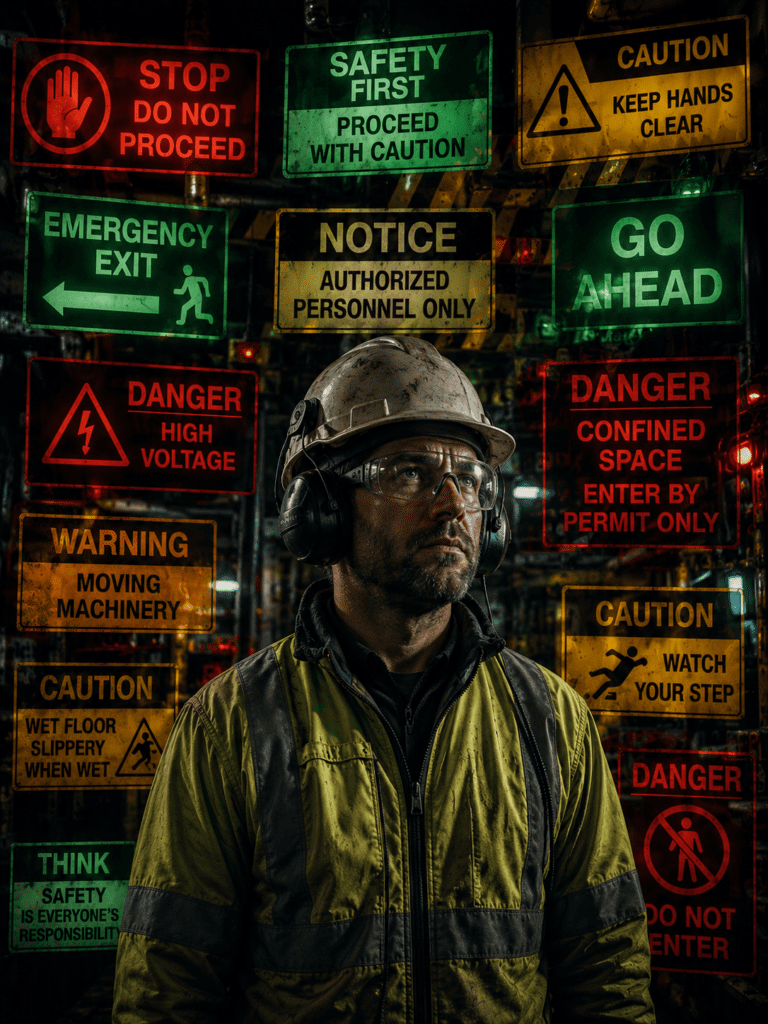
Take a Second Look
Human error surrounds us constantly — we rarely see it. This program reveals exactly where error comes from, and how to design it out of your systems.
"The most common phrase found in almost every accident investigation in the world is 'human error'. It is so easily expressed — and yet so poorly understood. If we are going to continue to rely upon it as the explanation for why people get hurt, we must have a far better understanding of where it actually comes from. And don't think 'humans'."
Human error is not a cause. It is a symptom.
Every time an investigation concludes with "human error" and stops there, it has failed. Not because human error was not involved — it almost always is. But because human error is always the end of a chain, not the beginning of it. Behind every human error is a system that created the conditions for that error to occur. A design that invited misreading. A procedure that required workarounds. A culture that normalised shortcuts. A workload that exceeded human cognitive capacity.
The Chartered Institute of Ergonomics and Human Factors is unambiguous on this point. Human error is a factor in virtually every workplace accident. But humans do not simply "decide" to make errors. Errors are created — by the interaction between human cognitive limitations and the environments we build around them.
The human brain is a remarkable instrument. It processes approximately 11 million bits of information per second — but only around 40 of those bits ever reach conscious awareness. The rest is handled automatically, by systems that pattern-match, shortcut, and predict based on past experience. Those systems are extraordinarily efficient. And they are the source of almost every human error ever made.
Confirmation bias. Availability heuristic. Frequency gambling. Automaticity. These are not character flaws. They are the predictable, well-documented cognitive mechanisms that every human brain uses every moment of every day. In most situations they serve us brilliantly. In high-risk environments, at the wrong moment, they kill people.
Take a Second Look is a two-day intensive Human Error Think-Shop developed by Transformational Safety®. It is unlike any safety program participants have ever attended — because it does not tell them about human error. It puts them directly into error states, in real time, and then deconstructs exactly what happened and why.
Participants experience the Stroop Effect. They confront the limits of their own situational awareness. They discover — viscerally, not theoretically — how extraordinarily easy it is for any human being, regardless of experience or intelligence, to go the wrong way.
Nobody who completes Take a Second Look ever thinks about human error in the same way again.
""Human error is not a cause. It is a symptom.
Behind every human error is a system that created the conditions for that error to occur. A design that invited misreading. A procedure that required workarounds. A culture that normalised shortcuts. A workload that exceeded human cognitive capacity.
Stop blaming the human. Start designing the system. That is where Take a Second Look begins.""