
Beyond Compliance
Reader Resources
Interactive tools to support your leadership development and turn the ideas in the book into practical reflection.
Explore your leadership identity and strengths, examine psychological safety, and reflect on the principles of High Reliability Organising.
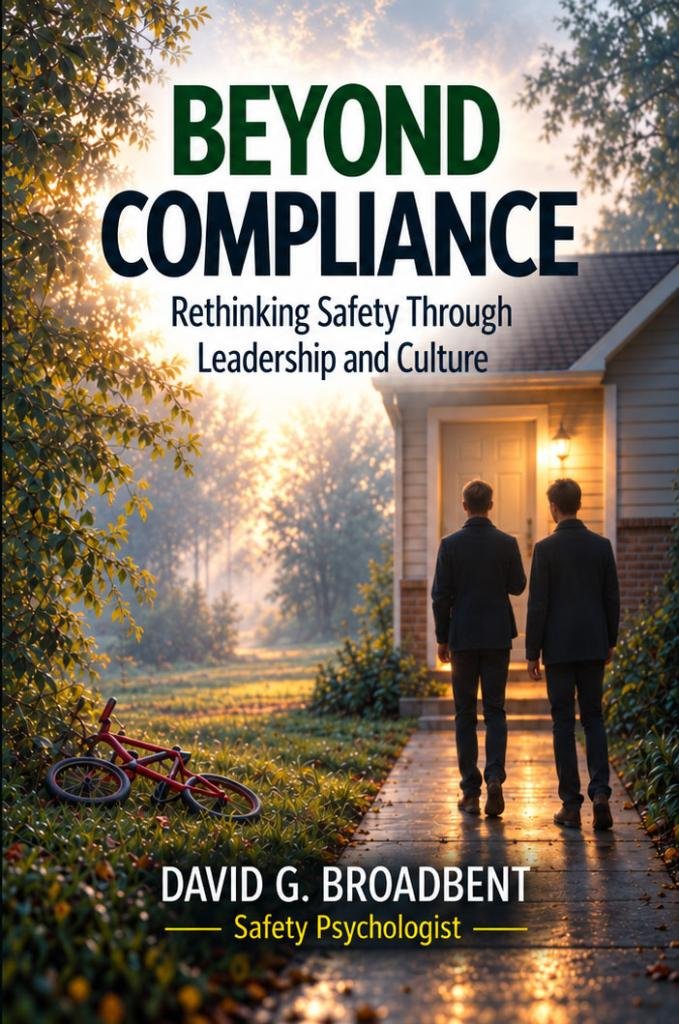
Most organizations that suffer a catastrophic safety failure were not ignoring safety. They believed they were managing it well. Their systems were certified, their training records were current, and their injury rates were falling. And still, one morning, two people walked up a quiet footpath to tell a family that someone was not coming home.
Beyond Compliance is about the gap between how safe an organization looks and how safe it actually is, and about the leadership that closes it.
Drawing on more than two decades of work with high-hazard industries around the world, Safety Psychologist David G. Broadbent shows why safety management systems, however well designed, cannot on their own produce safe operations. The real determinants of safety lie in culture, belief and the everyday decisions of leaders.
Inside, you will find:
- Why compliance creates the illusion of safety, and how organizations come to believe they are safe when they are not
- The difference between safety as a priority, which bends under pressure, and safety as a value, which holds
- Psychological safety as the condition beneath every safety culture, and why speaking up achieves nothing without leaders who listen
- The nine Transformational Safety® Leadership archetypes, from the Invisible Man to the Missionary, and what each one produces in a workforce
- The Transformational Safety® Integrated Model and Cultural Stability Theory: why defenses fail when they move, and how culture holds them still
- High Reliability Organizing, and what the organizations that fail least actually do differently
- The Trust Equation, and why Zero Harm targets can undermine the very trust they are meant to build
- A five-level safety culture maturity model, practical methods for assessing culture and leadership across an organization, and a clear path from assessment to lasting change
Written for executives, managers, supervisors and safety professionals in mining, energy, construction, aviation, healthcare and every industry where getting it wrong costs lives, Beyond Compliance asks one question of every leader: is the safety culture you have built good enough to protect the people who work within it?
If you suspect the answer is not yet, this book is where the work begins.
Explore the Reader Resources
Psychological Safety
Examine how effectively your workplace encourages speaking up, learning from mistakes, challenging assumptions and raising safety concerns without fear.
Chapter 6 | Page 63
High Reliability Organising
Explore the principles of High Reliability Organising and assess how youn anticipates, recognises and responds to emerging risks.
Chapter 12 | Page 125
ATLAS Leadership Development
Explore the seven pillars of authentic safety leadership, from understanding your identity and values to developing the skills needed to lead meaningful organizational change
Chapter 19 | Pages 219–222
Psychological Safety
Chapter 6 — The Condition Beneath the Culture: Psychological Safety | Page 63
Psychological safety is the foundation of a culture in which people feel able to speak up, question decisions, acknowledge mistakes and raise concerns without fear of embarrassment or punishment.
This reflection tool invites you to examine the everyday behaviours and leadership practices that either strengthen or undermine psychological safety in your workplace.
The purpose is reflection and improvement, not scoring or judging individuals.
High Reliability Organizing (HRO)
Chapter 12 — What Safe Organizations Actually Look Like: High Reliability Organizing | Page 125
High reliability organizations work in conditions where small errors can escalate quickly, yet they sustain remarkably safe performance. They do it through everyday habits: noticing weak signals, resisting easy explanations, staying close to frontline work, recovering quickly when things go wrong, and deferring to expertise rather than rank.
This reflection tool invites you to consider how strongly these practices show up in your own team and organization.
The purpose is reflection and improvement, not scoring or judging individuals.
ATLAS Leadership Development
Chapter 19 — The Transformational Safety System | Pages 219–222
ATLAS develops safety leadership through seven pillars, completed in sequence. The pillars move from understanding yourself as a leader, through your motivation, emotional intelligence, strengths and challenges, to your capacity to absorb change and put it into practice.
Choose a pillar below to open its reflection. We recommend working through them in order, beginning with Pillar 1.
The purpose is reflection and improvement, not scoring or judging individuals.